Newest

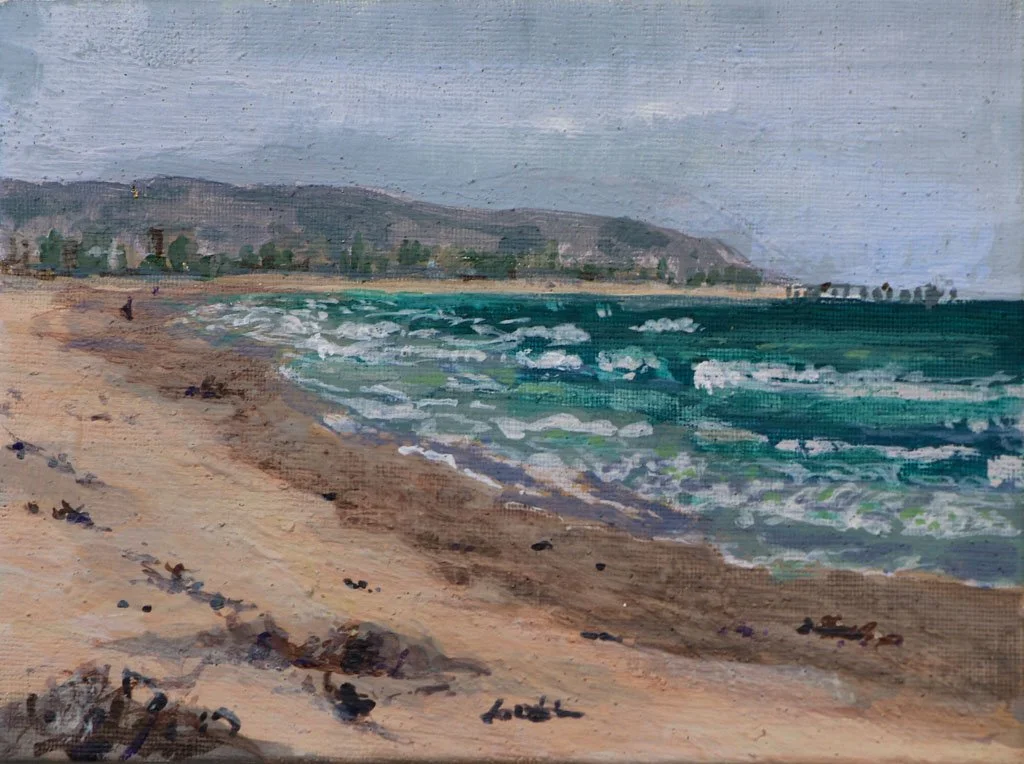
Coronado Island off San Diego has a stretch of “natural” beach stewarded by California as Silver Strand State Beach, which is to say it isn’t groomed to remove the daily tidal deposits of seaweed which house so much sea edge life. As such, it’s not a pristine stretch of sparkling smooth golden beach that curves toward the city of San Diego, but it’s a beloved playground and beautiful in it’s natural state. As I don’t see leaves nor seed pods nor fallen flower petals as “litter” neither do I see these untidy droppings of seaweed, little creatures and shells as unattractive. When I walk this often windy ungroomed beach, each seaweed clump is a little ecosystem of insects and sea creatures and a cave of treasures. The rich deep duck green of the water, the sparkling pale sand and the soft grayish cerulean of the sky, the sea leftovers marking the high and middle tide lines are just ornamentation and a gift to the curious.
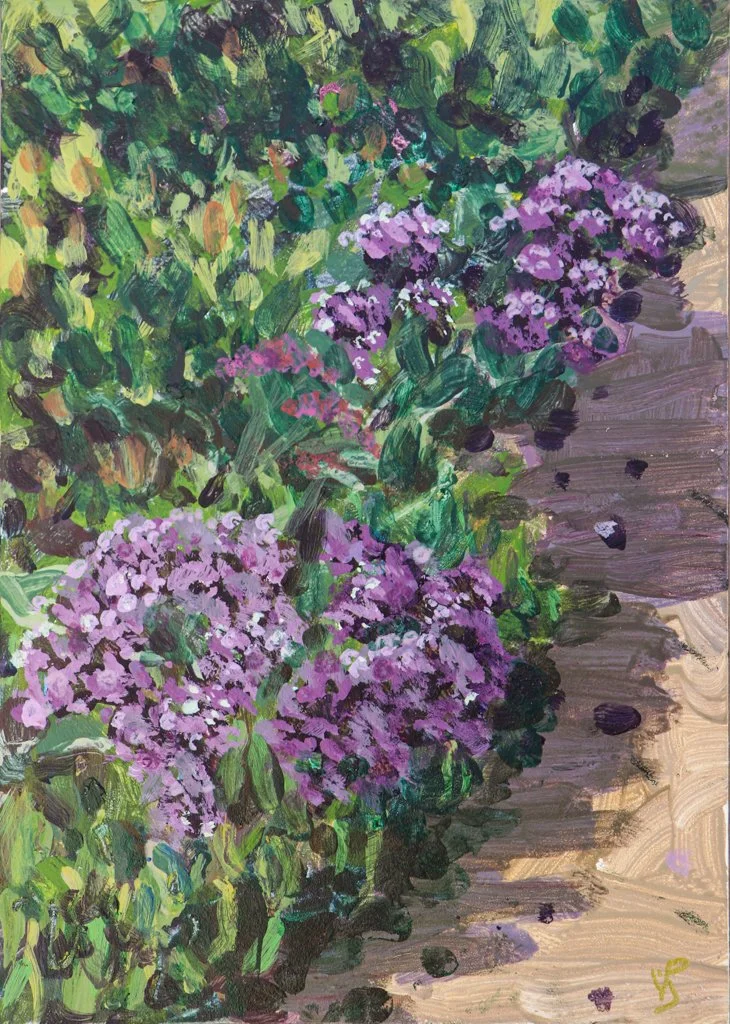
When traveling in southern California, especially coming from the Arizona desert, it is the flowers that siren sing to me from every neighborhood and roadside. Say hello to Sea Lavender. The cloudlike bloom clusters billow above low growing foliage, and I exclaim when I see this amethyst color dotted with lighter lavender and sparkling white papery little blooms. Cloudlike is the shape and like clouds they deserve more looking. I’ve read they also can be pink, so I will be looking for those. On a footpath to the boulevard from South Carlsbad State Beach, I just got lost first in the ice plant greens, with their fat little quarter moon shaped leaves on the sandy path edge, but the purple amethyst and lavender balloon-like bouquets just free for the luxury looking, make such an inviting pause. It is sometimes called marsh rosemary or lavender thrift and it grows in salt marshes and on coastal dunes, so I painted a wild clump that made its own composition and color. Painted on site in acrylics on board, just 5” x 7”, when in So Cal, do open your eyes to the flora, and try not to be jealous of Californians whose abundance of so many blooms hardly seems fair to the rest of us. Every natural scene is interpreted by the artist, but some compositions, of which this was one, need almost no massage.

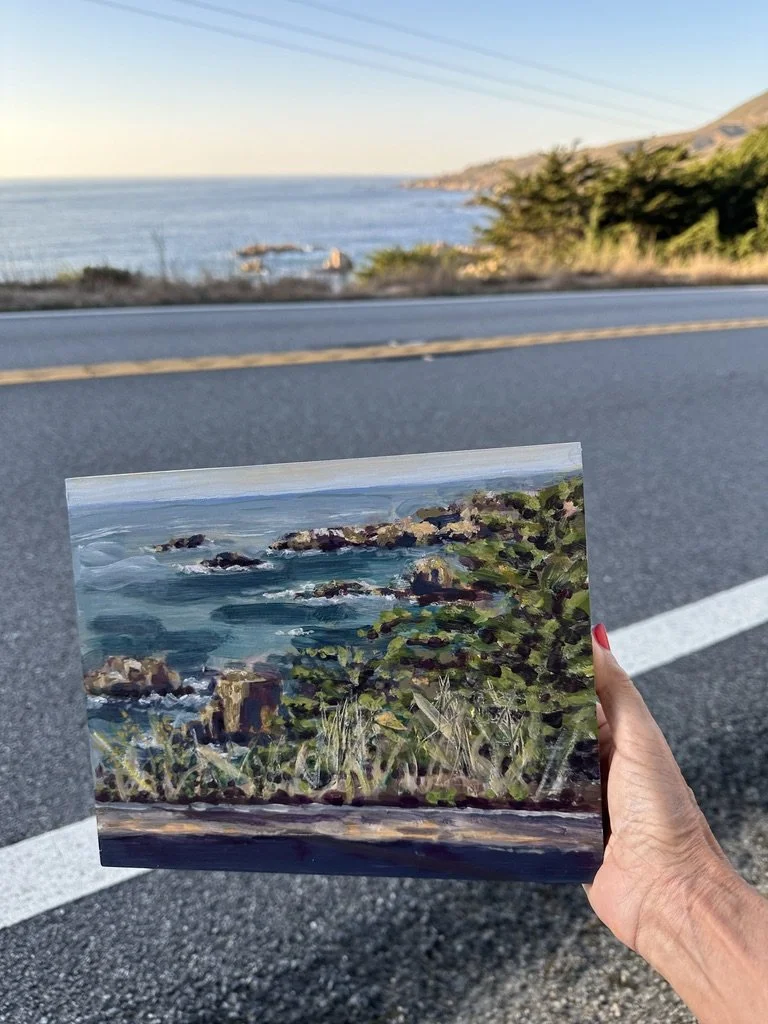
How to capture the blue-green of the Pacific from Silver Strand Beach - how many blues and greens would qualify to be among the pigments an artist would choose? It’s duck green for the head stripe of the teal, the American green-winged teal, and the Eurasian one too, and the wing embellishment of the blue-winged teal? During migration on the Mississippi Flyway you’ll spot a group of blue-winged or green-winged teal flying in small, tight formations, turning and landing together with the precision of the Blue Angels. When is the sea green and when is it blue - of course we are seeing light reflected, but surely we can believe a mixture of 50-50 green and blue or 60-40 with our eyes. Choosing the day in June when this tiny painting was made gave me the name, for these amazing little birds, for the iridescence of the wet seashells, and how delightful to know the 2026 Color of the year is predicted to be “Transformative Teal”. What a happy solution for the nature lover who can’t choose between blue and green. I named this tiny painting of the ungroomed Coronado Island Beach for it’s soul-soothing color, The Duck Green Sea.

Cedar & Sand
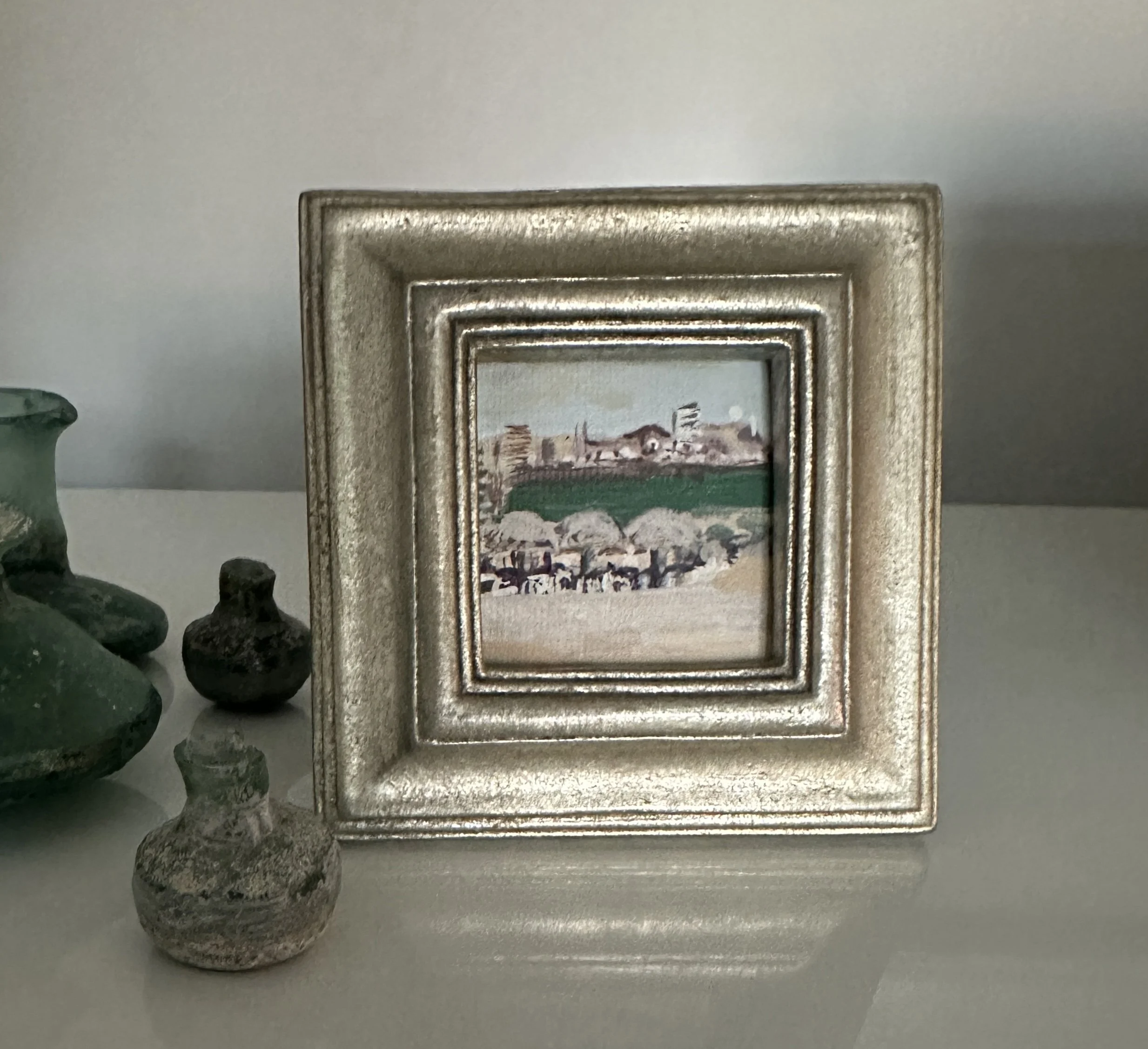
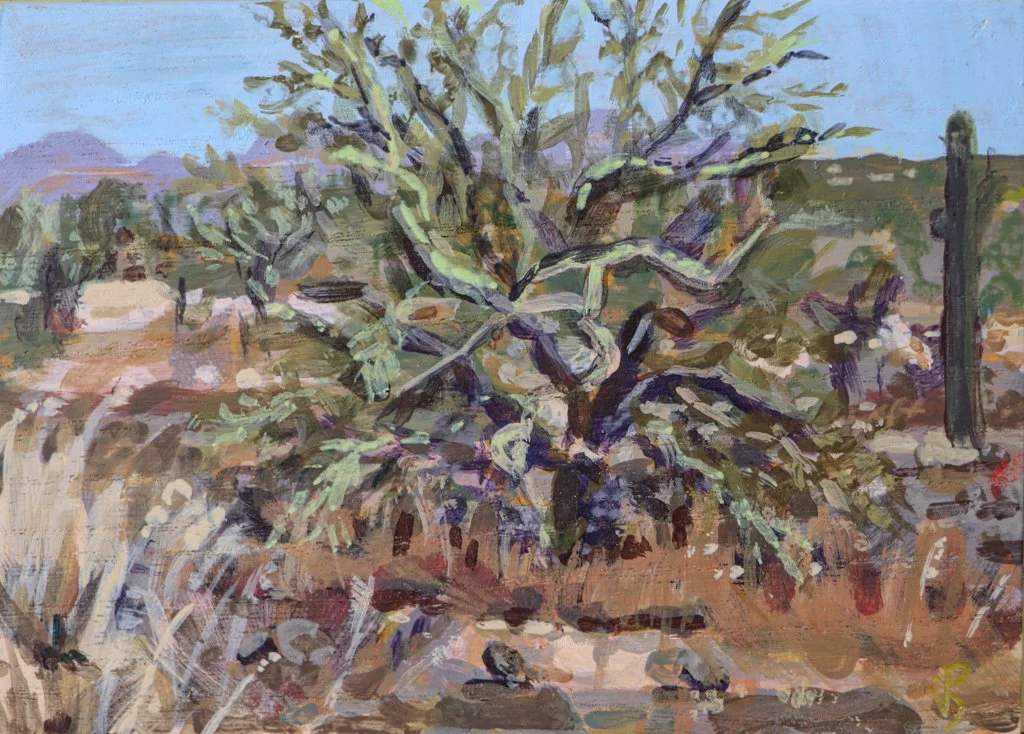
Painted in the parking lot looking south at the Apache Wash Loop Trailhead, with a scrawny coyote trotting past on a spring afternoon, (I didn’t catch him, so you will have to imagine him) this acrylic on canvas painting has it’s own oddly pleasing mix of parched sand and a purple atmosphere, and is why I love the Sonoran Desert. How these tough little cedar trees manage to survive under an unforgiving sun feels joyful and resilient without any of the green of a temperate spring. This one, this green, is on it’s way from gray to blue and green and happy to have gotten this far. Instead of looking for the most majestic saguaro in sight, I chose a modest view of desert scrub trees and shrubs, applied just the colors I saw, and stepping away was delighted with the cream-colored dried grasses, distant blue mountains, clear cerulean sky, parchment landscape with dried umber bits of deadwood, and those darkest shadows. If it can be seen even as an abstraction of these colors, and of life and death, of harsh heat and secrets of survival, all the better. Surely there are artists who choose to paint the grandest of canyons and mountains, and I’m not that, and I admit I’m drawn to closer, less sweeping, views of astonishing beauty before I even leave the parking lot for a trail. This is how I choose to look at the natural world around me, I’m not sure I know why, but it’s surprisingly fulfilling. Edgar Payne wrote in his Composition of Outdoor Painting that the artist’s most important job is thinking. I agree, and agree, and agree. 7” x 5”
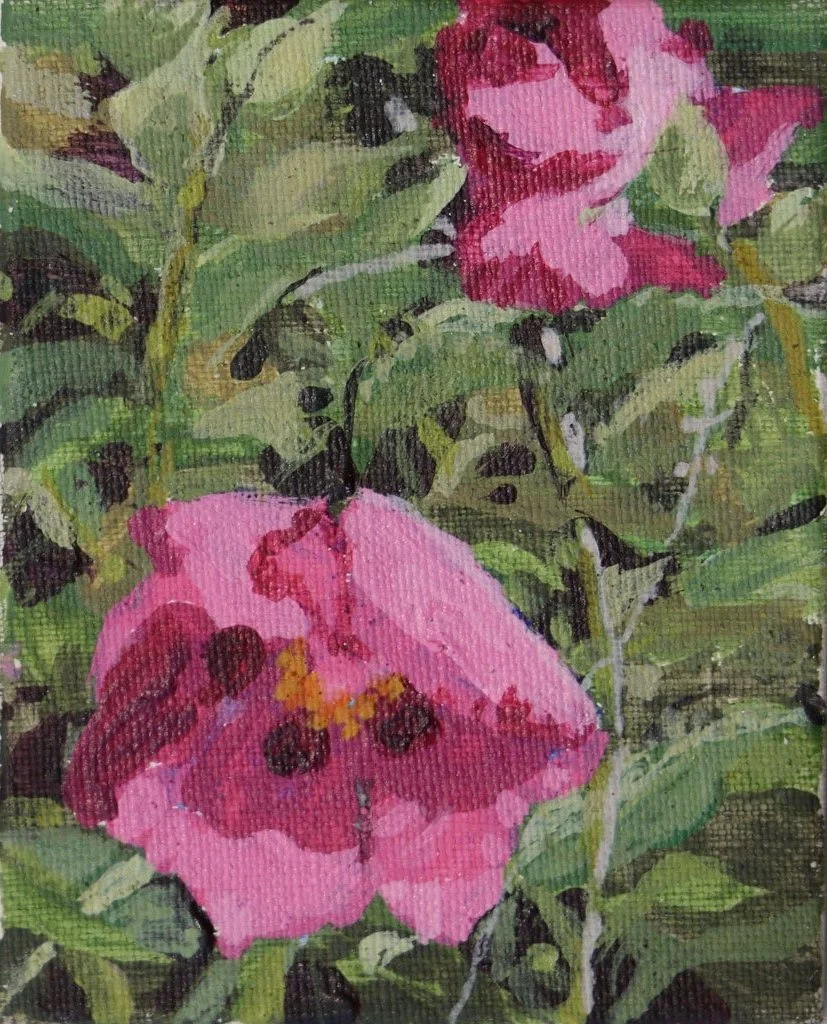
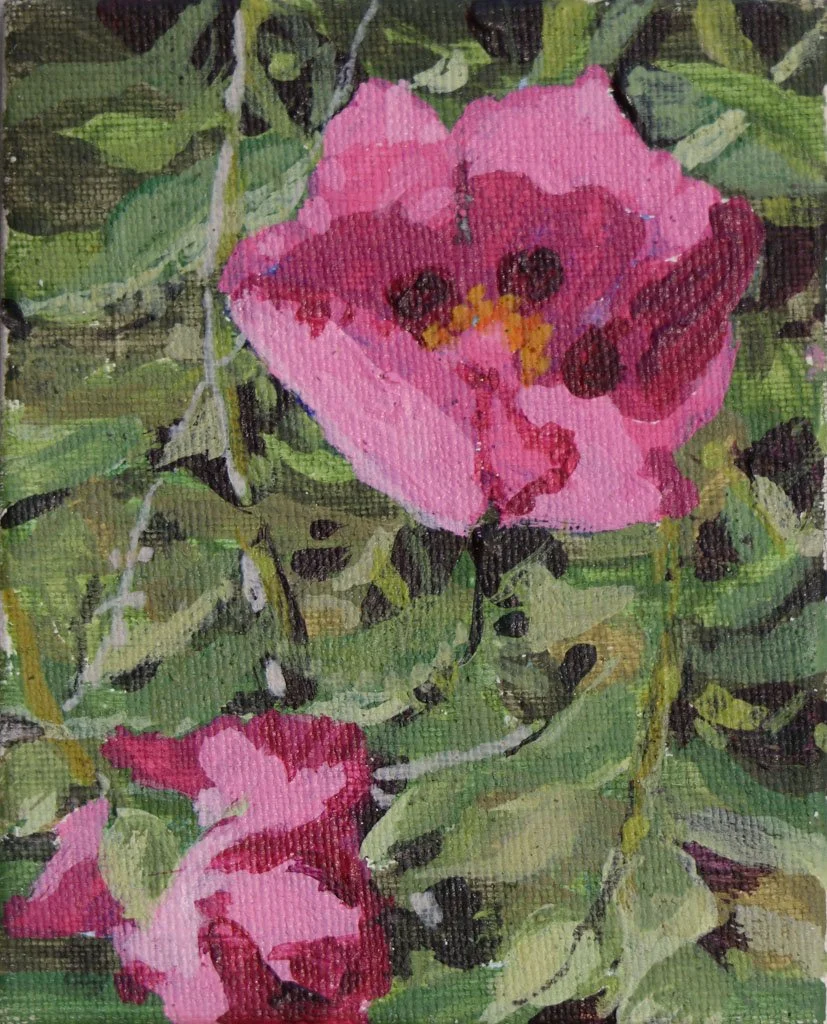
Because I saw these wildly magenta wild roses at Doheny Beach State Park in Dana Point, California, and didn’t get to paint them the first time I was there, and even though the choice of these meant I was missing so many other blooms, including honeysuckle, the sunburst blooms of ice plants ,and the ocean itself, I took my palette and this tiny canvas board into the clump, found this little petal folded onto itself, and found a way to keep my feet away from the ants to paint it nearly life-sized on a canvas board only 1.5” x 2”. A magenta pink five-petaled single rose, with eyes of dark red, yellow fringed centers, above dense green almond-shaped leaves, the blooms are so fragile, so fine, so few per bush where I found them under trees with not quite enough light, barely looking like they would last a day in the sun, and hardly able to hold up their heads in the wind, how are these little feral warrior blooms not worth a portrait? Among my smallest works yet, is a painting any less a work of art because it is small? Like the blooms themselves, to fully appreciate them, you must come close. I’ve read these wild roses range from brightest magenta like these to pink and nearly white, When I find them, I’ll paint them too.

Among the deeply satisfying tasks of being an artist, naming (and here describing) my paintings by subject and location (instead of some AI generated less than meaningful fluff) has been my preference, except that there IS feeling to the colors alone, and I would prefer their names to hint at it at least. For ease and joy, I’ve employed one of my most cherished books, Maerz & Paul’s Dictionary of Color, a color name reference originally published in 1930. So this tiny painting made in the parking lot of the aquatic center at Silver Strand State Beach on Coronado Island, California is of California Buckwheat, but looking up it’s darker petaled shade, it’s labelled “Springtime”. The paler ones I painted are maybe “Venetian Pink” or “Powder Pink” according to M & P. Because I am much more of a painter than a drawer, finding a match in nature to the colors I can mix on my palette is among the most satisfying aspects of my practice. While cultivated flowers are dreamy painting subjects, humble wildflowers (weeds to some) routinely draw my appreciation. Can you feel it? Does it make you smile? It’s just such a welcome miracle to me to see the delicate petals of miniature blooms which form these little ball-shaped composite clusters, in spite of, not because of, human cultivation.